
Coralville Previous Resident Sources
A backward address trail crosses current parcel data, recorded transfers, directories, newspapers, maps, and archives. Start with the source closest to the period being studied. A parcel card can anchor the land, but it cannot prove an older household.
| Source | Documented span | Where held | What it shows |
|---|---|---|---|
| Assessor and PIV | Current parcel cycle | Johnson County | Parcel, legal description, mailing role, map |
| Recorder land records | Images from 1840; online party index from November 1983 | Johnson County Recorder | Grantor, grantee, instrument, legal description |
| Smith's directory | 1922 volume inspected | Internet Archive | Alphabetic, street, household, business, county entries |
| Coralville Courier | 1968-1988 | Coralville Public Library | Names, streets, events, businesses, obituaries |
| Permit search | Online results from 2017 | Coralville Community Development | Address, owner, applicant, contractor, type, status |
For recent ownership, begin with the assessor and Recorder. For a mid-century household, use phonebooks, directories, newspapers, and census context. Early records may use a township, mill, school, road, plat, or post-office label rather than a modern Coralville address.
The access channel changes with the era. Current parcel and permit records are searchable online. Older land images may be online even when their party index is not. Library databases may require an onsite visit or card access. Historical Society research is appointment-based, and City Clerk cemetery confirmation may require a phone or direct request. Treat those routes as part of the record set, not as second-class substitutes for a web search.
Browse Coralville Digital History
Coralville Digital History brings together six local collections with photographs, documents, and oral histories. Search a street, family name, school, business, or landmark. Save the item title, collection, date, and repository identifier. A remembered address in an oral history is useful context, but it should remain labeled as recollection until a deed, directory, census, or dated paper supports it.
The Digital History collections page shows the collection scope and browsing controls.
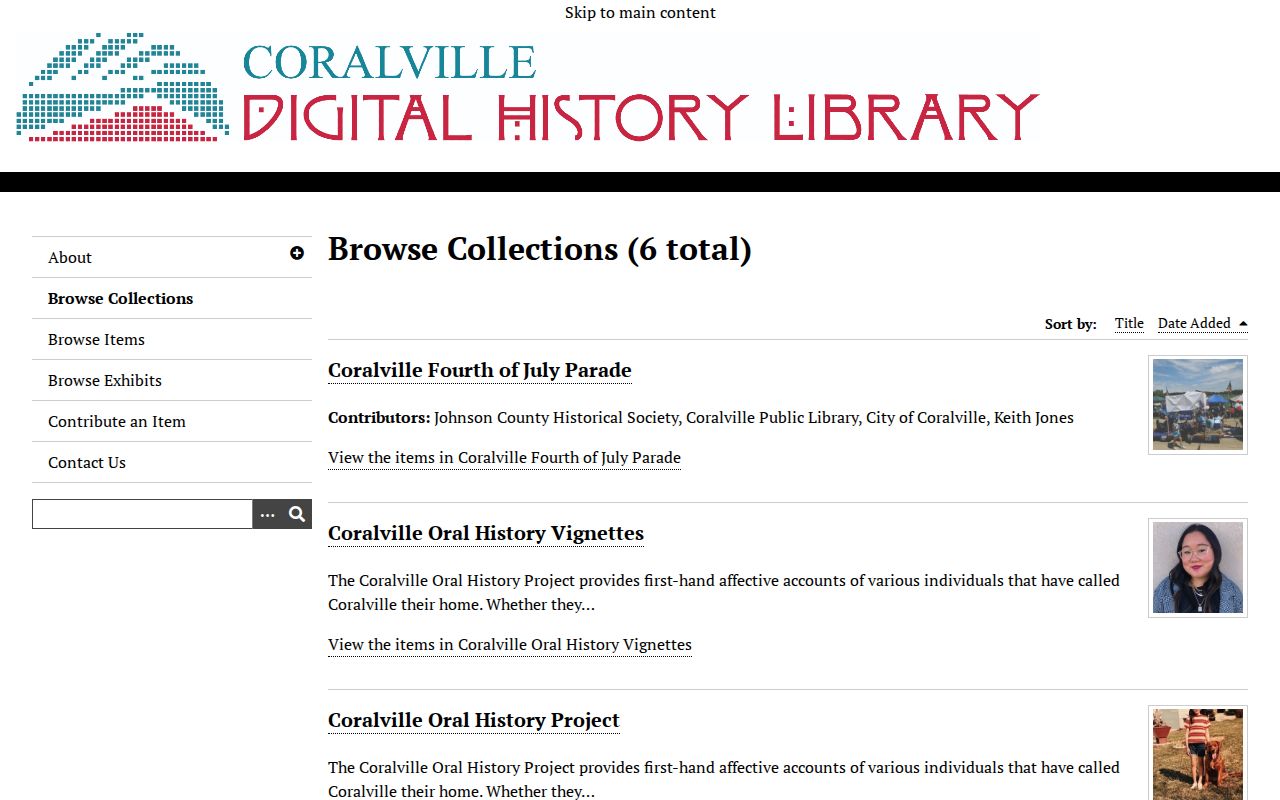
The collection view adds local images and voices that a parcel card cannot supply.
Trace Coralville's Deed Chain
Find the current parcel through the county property lookup. Carry its legal description into the Recorder's index. Work from the current grantee, the party receiving an interest, back to the grantor, the party transferring it. The land description is the thread when street numbers change.
- Confirm the parcel number, situs address, and legal description in the assessor or PIV record.
- Search the current owner as a grantee in the Recorder index.
- Open the matching instrument and note its grantor, date, type, and legal description.
- Search that grantor as a prior grantee. Use subdivision, group, kind, date, and spelling controls when needed.
- For pre-index material, call or visit the Recorder for older books, images, plats, and staff help.
- Grantor and grantee
- The parties transferring and receiving a recorded interest.
- Chain of title
- The linked sequence of transfers affecting the same land.
- Legal description
- Lot, block, addition, or metes-and-bounds wording that identifies land beyond a street number.
Land images begin in January 1840, while the online party index begins in November 1983. Older links may not connect cleanly. Help remains available in person at 913 S Dubuque Street in Iowa City or by phone at 319-356-6093.
Trust transfers, estate instruments, quitclaim deeds, releases, and lot splits can interrupt a simple buyer-to-seller chain. Follow the legal description and document type rather than assuming each instrument is an ordinary sale. The Recorder notes that older releases may not link to the instrument they release, and subdivision-name searches may need spelling variants. When an image is hard to read, request a copy or staff help instead of guessing at a name.
Pair Coralville Directories and Census
Directories can place an adult at an address between census years. Census schedules can describe a household at a dated count. Neither source proves that the household stayed for a full decade. Keep spouse notes, occupations, renter marks, and address entries tied to the volume year.
The scanned 1922 Smith directory page demonstrates the alphabetic format and Coralville-road context.
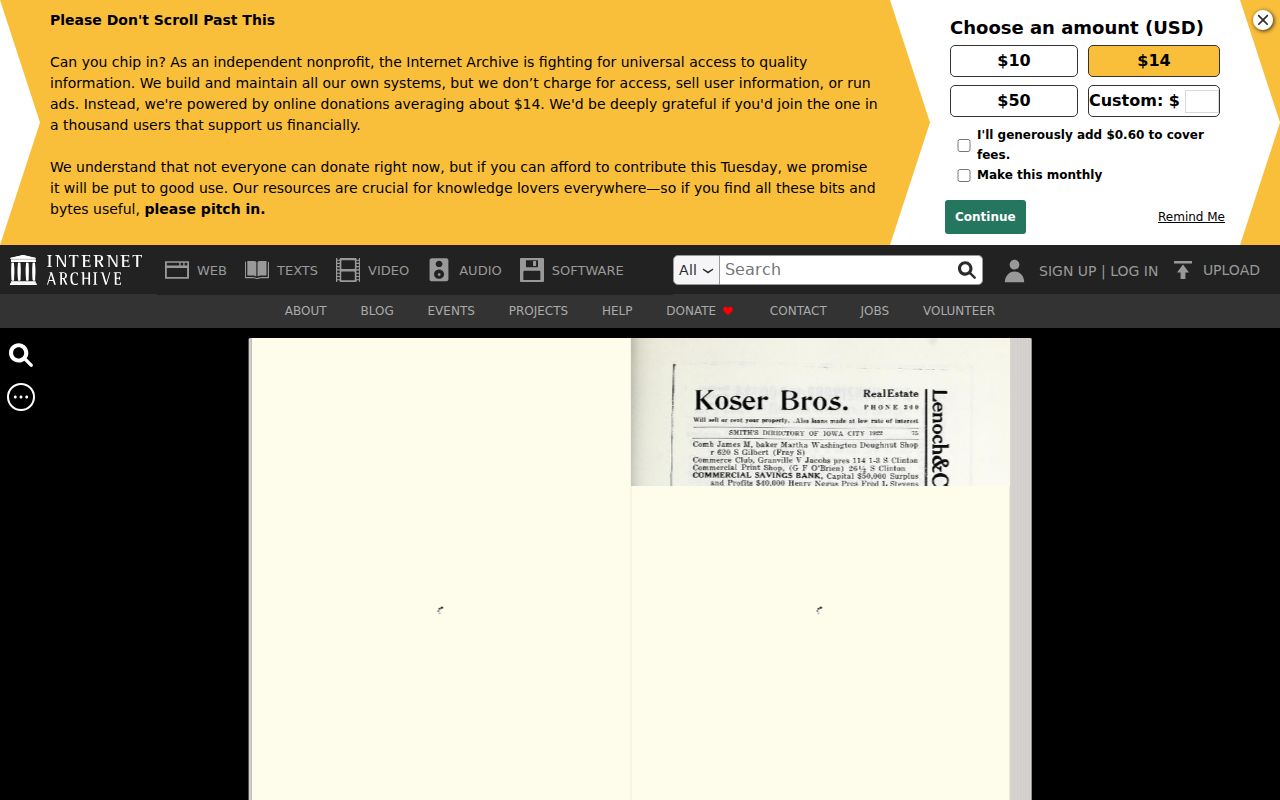
Read its abbreviation key and county section before assigning an entry to a modern street.
- Search the address and family name in the nearest directory year.
- Compare the household with the closest available census schedule.
- Check the next directory year for a move, spelling change, or new householder.
- Use deeds and permits to separate household change from parcel change.
Search Coralville Courier Names
The Coralville Courier Community History Archive covers 1968 through 1988. Search surnames with streets, schools, clubs, events, and businesses. Try spelling and OCR variants because scanned print can be misread. Save the issue date and page, then compare the event with a directory, deed, permit, obituary, or public meeting record.
The Coralville Public Library genealogy page routes researchers to the Courier, obituaries, census sources, Digital History, newspapers, and in-library databases. Staff and onsite tools are key fallbacks when remote search stops.
Newspaper evidence can connect a former resident to a school event, council issue, business, club, sports team, anniversary, or funeral. Keep the article's language and date separate from later records. An obituary may name prior places, relatives, or a cemetery, while probate may identify an estate role. Neither should be used to fill gaps with an assumed address that the source does not state.
Coralville Homes in County Archives
The Johnson County Historical Society holds atlases, farm directories, aerial photographs, deeds, maps, and resident collections. Research access is by appointment, and reproduction fees may apply. It is useful when an address trail stops at a rural road, addition, or landscape feature.
The Historical Society collections page explains its scope and access route.
Atlas and aerial evidence can connect an old legal description with a later Coralville street without inventing a renumbering date.
Coralville Permits Date Property Change
The public Coralville permit portal searches several people-bearing terms, including address, owner, applicant, contractor, and contact, along with permit type and status. Online results begin in 2017. Older building material should be requested from Community Development rather than treated as absent.
A permit date can explain why an old directory address no longer matches the building on a current aerial. It may document an addition, demolition, new structure, or other work while naming several parties with distinct roles. The applicant or contractor is not necessarily a previous resident. Copy the permit number, status, address, work description, application and issue dates, and named role exactly as displayed.
The portal's result pattern also includes permit type, subtype, fee amounts, valuation, contractor license details, and record-status links when those fields apply. These details date work on the site and can separate a change in the structure from a change in the household. Do not use a contractor's business address as the property's residential address.
For missing city material, contact the department or City Clerk with the street, number range, permit class, and date span. Iowa Chapter 22 supports requests in person, in writing, by phone, or electronically, subject to exemptions and reasonable actual costs. A narrow request is more useful than asking the city to create a complete house history.
Map Coralville Previous Residents' Place
Johnson County PIV and the Historical Society's aerials help place an address in its physical era. Record parcel geometry, road access, nearby waterways, additions, and visible development. Coralville's river, reservoir, interstate, mall, and Iowa River Landing eras changed how places were described and reached.
Iowa City Public Library reports plat, map, Sanborn, directory, phonebook, and yearbook holdings for local history. The research did not verify a complete Coralville Sanborn sheet run, so ask staff about the specific road and year. A map that omits the house is still evidence about coverage, not proof that the structure did not exist.
Pair every map or aerial with a dated person source. The map explains the setting; it usually does not name the household. A directory, newspaper, census, obituary, deed, permit, or cemetery file supplies the person role. Keeping the two evidence types separate makes the backward trail easier to audit.
Modern PIV can add zoning, flood, elevation, voting, aerial, and planning context. Older atlases and aerials may show roads, farm boundaries, waterways, or structures before a subdivision existed. Compare like with like: a parcel boundary is not a building footprint, and a postal address point is not always the center of the legal parcel.
Test Coralville Historical Name Matches
Common surnames and initials can merge two people by mistake. Require two independent anchors before treating records as the same previous resident. Useful anchors include a dated street address, spouse or household member, occupation, business, school, public office, parcel legal description, or recorded event.
Write down the exact search input and keep an unresolved bucket. A person in the Courier may share a surname with a deed party but have no address link. Someone in a 1922 directory cannot be joined to a current same-name parcel owner by Coralville alone. Negative and uncertain results prevent the same bad match from returning later.
The final timeline should alternate evidence, not flatten it: directory occupant, census household, deed party, permit role, newspaper event, cemetery confirmation, or probate record. Dates and labels show where the sources agree and where the identity remains open.
When a conflict remains, write both versions. One source may use a mailing address, another a situs address, and a third an older road form. A family member may appear under initials in a directory and a full name in an obituary. The goal is a traceable history of claims, not a seamless story made by dropping inconvenient details.
Resolve Old Coralville Addresses
No complete official Coralville street-renumbering index was found. Preserve the historical address, then compare a plat, deed, city packet, USPS form, assessor record, and PIV parcel. Early sources may use township, mill, school, road, or post-office terms.
Local history supplies era terms. Iowa River mills, Clarksville, and Coral Mills fit early records. The schoolhouse, reservoir, I-80, commercial growth, and Iowa River Landing fit later searches. These terms help locate a place in papers, oral histories, maps, and city archives when a modern street number fails.
The State Historical Society's Johnson County inventory extends the fallback chain. It identifies land and mortgage series from 1839 and 1840, early assessor books, an 1844 census, and court, probate, naturalization, voter, and vital series. Those records may use county or township geography instead of Coralville. Preserve the original place label in the citation, then explain its present relationship only after checking a map, plat, or deed.
Iowa City Public Library also holds Johnson County census, vital, cemetery, plat, Sanborn, directory, phonebook, yearbook, and digital-history material. The research did not verify a complete Coralville-only directory run or a Coralville Sanborn sheet sequence. Ask staff about the address and period rather than assuming a missing online image means no local record survives.
Coralville Past Household Endpoints
Owners are only one part of a house history. The Coralville city directory collections, census, newspapers, and obituaries may identify people who occupied or were linked to an address without holding title. Keep occupant, owner, mailing name, permit applicant, contractor, and deed party as distinct roles.
Obituaries and probate may explain why a household vanishes. Oak Hill Cemetery plot and interment records are held by the Coralville City Clerk and lack a complete public online index. Call or use the clerk route for confirmation. Historical vital records may open through the State Archives after Iowa's time thresholds; newer certified copies require eligibility and identification.
A careful previous-residents note ends with the source URL, retrieval date, exact address form, record title or number, named role, event date, and any unresolved conflict. Keep a separate “not the same person” list for repeated names. A matching surname and ZIP are not enough to merge a current person with someone found in a historical directory.
Lawful use. Research previous residents for house history, genealogy, or personal curiosity. Never use an old address trail to track, harass, or threaten a living person.